
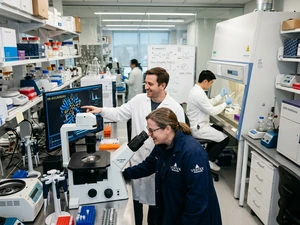
How AI Is Revolutionizing Discovery of New Medical Treatments
By Taylor Brooks. May 14, 2026
Artificial intelligence is fundamentally changing how pharmaceutical researchers identify, develop, and test new drug candidates. Machine learning algorithms are accelerating the drug discovery process, reducing development timelines and costs while expanding the range of diseases targeted for treatment innovation.
Traditional drug discovery required years of laboratory experimentation, screening thousands of chemical compounds, and testing candidates through multiple validation phases. This process was expensive, time-consuming, and often unsuccessful-many drug candidates failed at late stages after substantial investment. AI is introducing algorithmic efficiency that reduces both timelines and failure rates.
How AI Applications Work in Drug Discovery
Machine learning systems analyze vast databases of molecular structures, genetic sequences, and disease pathways to identify promising drug candidates. The algorithms learn to recognize patterns associated with successful drugs, then apply these patterns to identify new compound combinations that might prove therapeutically effective.
AI systems can model how potential drugs interact with disease targets-such as proteins involved in cancer, neurological diseases, or cardiovascular conditions-without requiring physical laboratory testing of each candidate. This computational modeling dramatically reduces the number of compounds requiring laboratory validation, accelerating the transition from theoretical candidates to clinical testing.
Accelerated Development Timelines
The most immediate benefit of AI in drug discovery is timeline acceleration. Processes that historically required years of laboratory work can now be completed in months through computational modeling. This acceleration has profound implications for patients waiting for treatments-particularly for rare diseases or conditions with high mortality rates.
Some researchers estimate that AI-assisted drug discovery could reduce development timelines by 30 to 50 percent compared to traditional approaches. This represents not merely efficiency gain but potentially life-changing impact for patients whose treatment options are limited by slow drug development cycles.
Expanded Disease Coverage
AI enables researchers to tackle diseases that might be economically unattractive under traditional discovery models. Machine learning can efficiently explore therapeutic possibilities for rare diseases affecting small patient populations-conditions previously considered economically non-viable for pharmaceutical development.
This democratization of drug discovery potential means that smaller research groups and organizations can pursue treatment development with AI assistance, rather than requiring the massive resources historically necessary for pharmaceutical innovation.
Disease Categories Benefiting
Multiple disease categories are experiencing AI-assisted treatment development. Cancer research benefits from AI-enabled identification of novel tumor targets and combination therapy strategies. Neurological diseases-including Alzheimer’s, Parkinson’s, and rare genetic conditions-are subjects of AI-accelerated research.
Cardiovascular disease, infectious disease, and autoimmune conditions all represent areas where AI is identifying new therapeutic approaches. The technology is broad enough to enhance research across virtually all therapeutic areas.
Real-World Impact
Several pharmaceutical companies have already integrated AI into their drug development pipelines. Early results show that AI-identified drug candidates are advancing through clinical trial phases at rates comparable to or better than traditionally identified candidates. This suggests that the computational approach does not sacrifice safety or efficacy-it simply identifies promising candidates more efficiently.
Challenges and Considerations
Researchers acknowledge several challenges in AI-assisted drug discovery. The algorithms are only as good as the data they are trained on-biased or incomplete historical data can perpetuate problems. Regulatory pathways for approving AI-designed drugs are still evolving. Patent and intellectual property questions surrounding AI-generated discoveries remain unsettled.
Additionally, while AI is revolutionizing discovery and early development, human expertise remains essential for clinical trial design, patient selection, and translating laboratory findings into medical practice.
Future Possibilities
The convergence of AI, genomics, and clinical data promises further acceleration in treatment development. Personalized medicine-using AI to design treatments tailored to individual patients’ genetic profiles-represents a frontier of emerging possibility. AI-assisted development of preventive treatments and early interventions could transform medical practice from reactive treatment to proactive health maintenance.
The transformation is still in early stages, but the trajectory is clear: artificial intelligence will play an increasingly central role in how new medical treatments are discovered, developed, and deployed to patients across diverse disease categories.
References: How artificial intelligence is revolutionizing the discovery of new medical treatments

The News Command team was assisted by generative AI technology in creating this content
Trending

Read More

Read More

Read More

Read More

Read More

Read More

Read More

Read More

Read More

Read More

Read More

Read More

Read More

Read More

Read More

Read More

Read More

Read More

Read More

Read More

Read More

Read More

Read More

Read More