
Artemis II Launch Marks NASA's Return to the Moon
By Morgan Blake. Apr 2, 2026
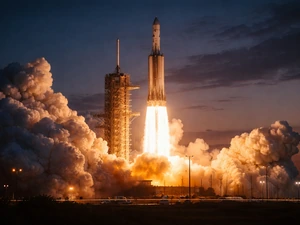
NASA’s Artemis II mission lifted off from Kennedy Space Center in Cape Canaveral, Florida, at 6:35 p.m. EDT on April 1, 2026, sending four astronauts on a nine-and-a-half-day journey around the moon and back - the first crewed lunar mission since the Apollo 17 flight in December 1972, according to CBS News. The Space Launch System rocket and Orion capsule carried the crew through cloudless skies, with an estimated 250,000 spectators gathered near the space center to watch the ascent. NASA Administrator Jared Isaacman said at a post-launch briefing that after a “brief, 54-year intermission, NASA is back in the business of sending astronauts to the moon.”
The launch also marked the first time NASA’s Space Launch System rocket - the most powerful operational launch vehicle in the world - had ever carried human passengers into orbit, according to CBS News. The previous Artemis I mission in 2022 flew the same rocket and Orion capsule without a crew as a systems test. The April 1 flight was delayed from its original February window after engineers worked through hydrogen fuel leaks and issues with the upper stage propellant pressurization system, both of which were resolved before launch.
The Crew
The four astronauts aboard the Orion capsule are NASA commander Reid Wiseman, pilot Victor Glover, and mission specialist Christina Koch - all making their second trips to space - and Canadian Space Agency astronaut Jeremy Hansen, who is making his spaceflight debut, according to CBS News and NBC News. The mission makes Hansen the first Canadian ever to fly on a lunar mission, a milestone marked by Canadian Prime Minister Mark Carney in a statement released shortly after liftoff.
The crew was selected for the flight in 2023 and spent three years preparing for the mission. Wiseman described the significance in pre-launch interviews, saying this generation would no longer look at the moon as somewhere humanity had been, but as somewhere humanity still goes. The crew signed their names on the wall of the white room at the launch pad access arm - a tradition dating back to the Gemini program - before boarding the Orion capsule.
What the Mission Is Designed to Do
Artemis II is classified as a test flight, intended to check out the Orion capsule’s life-support systems, communication equipment, and docking procedures in real spaceflight conditions, according to CBS News. The crew spent the first hours in Earth orbit running through systems tests before a critical engine burn - called the trans-lunar injection - propelled them out of Earth’s orbit and onto a free-return trajectory toward the moon.
The mission does not include a lunar landing. The crew is expected to fly within 4,000 to 6,000 miles of the lunar surface during the flyby before using the moon’s gravity to bend their path back toward Earth, with a splashdown scheduled in the Pacific Ocean off San Diego on April 10. NASA describes the flight as a key step toward the Artemis III mission in 2027 and a planned moon landing on Artemis IV in 2028.
A 53-Year Gap Closed
Retired NASA astronaut and ISS commander Leroy Chiao told CBS News on the morning of launch that the crew was “very relaxed” and “in great spirits,” noting that years of preparation had put them in a strong position heading into the day. The mood at the Kennedy Space Center reflected both the historical weight of the moment and the practical seriousness of the work ahead. Mission flight operations director Norm Knight noted at a post-launch briefing that the crew would be kept on a demanding schedule through their first night in space, with a critical engine burn scheduled to wake them mid-sleep.
The Artemis II mission represents NASA’s first opportunity to validate that the Orion spacecraft can support a human crew across the full arc of a lunar journey - from Earth orbit to deep space and back. Results from this flight will directly shape preparation for the missions that follow.
References: NASA launches Artemis II astronauts on mission around the moon | Artemis II launches into orbit as NASA begins historic moon mission

The News Command team was assisted by generative AI technology in creating this content
Trending

Read More

Read More

Read More

Read More

Read More

Read More

Read More

Read More

Read More

Read More

Read More

Read More

Read More

Read More

Read More

Read More

Read More

Read More

Read More

Read More

Read More

Read More

Read More

Read More