
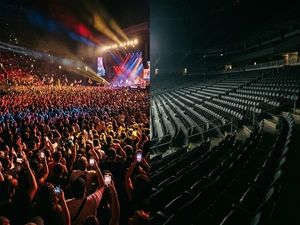
Mega-Tours Sell Out as Smaller Shows Go Empty
By Taylor Brooks. Jun 20, 2026
Two Concert Economies at the Same Time
Americans are spending record sums on live music and walking away from it at the same time, and the gap between those two behaviors is widening in 2026. A small number of mega-tours are shattering records while many mid-tier performers face unsold seats, exposing a live-music market splitting into two very different experiences.
The numbers capture the divide. Concert ticket sales are up 11% for the year, according to industry reporting, but that growth is concentrated at the very top of the market rather than spread across it. A single headline figure, in other words, can hide two opposite stories unfolding under it.
The Tours Breaking Records
At the high end, demand has rarely looked stronger. The Weeknd’s 2026 tour had already sold more than 3 million tickets and generated more than $440 million in revenue, according to reporting tracking the tour. BTS posted the biggest box-office concert report of 2026, earning $40.7 million from 194,000 tickets across three shows at Raymond James Stadium in Tampa.
These figures describe a tier of superstar events that function almost as their own economy, where fans treat attendance as a must-do experience and spend accordingly. At this level a concert is no longer one option among many but an event positioned as unrepeatable, and the pricing reflects that framing.
The Shows Going Half Empty
Beneath that tier, the picture is different. The American live-music industry has seen a wave of cancellations, rescheduled dates, and partially empty arenas, according to reporting on the season. For mid-tier artists, the contrast with the record-setting tours has been stark.
The cost of attending has climbed alongside the divide. The average concert ticket price rose from roughly $82 in 2020 to nearly $144 in 2026, not counting parking, fees, transportation, lodging, food, or merchandise. For a night out that already competes with every other discretionary expense, those add-ons turn a mid-tier show into a decision rather than an impulse.
Where the Money Is Going Instead
In an economy shaped by persistent inflation and cost-of-living pressure, many fans have redirected spending toward short trips, dining, streaming, and savings. For mid-tier artists, that pullback has translated into unsold seats even as the headline sales figure for the year keeps rising.
The two audiences are not really the same people behaving differently. They are different segments: one with the means and motivation to chase marquee events, another quietly editing concerts out of the budget. Read that way, the empty seats and the record grosses are not a contradiction but two ends of the same widening split. The same year that produces a record headline can also produce a thinning middle, because the two outcomes belong to different groups of fans.
What the Divide Says About Spending
The split reveals how Americans are rationing discretionary spending, pouring money into a handful of marquee experiences while treating routine concertgoing as a luxury they can skip. One audience is willing to pay almost anything for a singular event; another has effectively priced itself out of the rest.
The result is a market where the top performs better than ever and the middle thins out. That pattern, rather than a single blockbuster or a single empty arena, is the real story of the 2026 live-music season. It describes a culture that still values the live experience but increasingly reserves it for the events deemed essential. The choice fans are making is not whether to attend live music at all, but which single show is worth the full cost of going, and that calculation increasingly favors only the largest events.
Where the Numbers Land
The headline figure and the on-the-ground reality point in opposite directions only if read in isolation. Read together, they describe concentration: growth that is real but narrow.
According to industry reporting, concert ticket sales were up 11% for the year, with the growth concentrated among top artists while mid-tier performers faced unsold seats.
References: Concert Ticket Prices Live Music Demand | The Weeknd 3 Million Tickets 440 Million Tour 2026

The News Command team was assisted by generative AI technology in creating this content
Trending





Read More
Read More
Read More

Read More

Read More


Read More
Read More
Read More
Read More
Read More

Read More

Read More
Read More
Read More