The Supreme Court Killed the Main Tariff - Congress Is Letting the Replacement Expire Without a Vote
By Riley Monroe. Jul 23, 2026
February: The Supreme Court Ends the Main Tariff
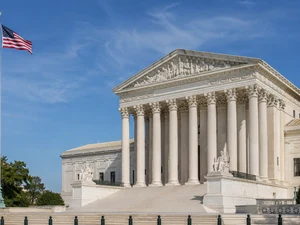
On February 20, 2026, the Supreme Court ruled 6-3 in Learning Resources, Inc. v. Trump that the International Emergency Economic Powers Act does not authorize the president to impose tariffs. Chief Justice Roberts, writing for the majority, held that reading the statute’s power to ‘regulate’ imports as including a taxing power would render it partly unconstitutional.
The ruling invalidated the sweeping global tariffs that had been in place since early 2025. More than $166 billion in already-collected duties became potentially refundable. Trade law practitioners described the ruling as the most significant restriction on executive trade authority in decades. The administration had four days to respond before markets opened.
February 24: A Cold War Law Nobody Had Ever Used
Four days after the ruling, the administration invoked Section 122 of the Trade Act of 1974 - a statute designed for Cold War-era balance-of-payments emergencies and last used by President Nixon in 1971. A global 10 percent import surcharge took effect on February 24, applying to virtually all imports.
Section 122 had never previously been used to impose tariffs. It comes with hard statutory constraints: the rate cannot exceed 15 percent, and the surcharge cannot last more than 150 days without an act of Congress. Perkins Coie noted in a client alert at the time that the administration had reached for a legal instrument that was ‘structurally constrained and untested in the courts.’ The 150-day clock began running immediately.
May: A Federal Court Strikes Down the Replacement Too
The legal challenges followed quickly. Critics argued that a trade deficit and a balance-of-payments deficit are legally distinct concepts, and that the administration had not established the conditions Section 122 requires. The Court of International Trade agreed in early May 2026, finding the Section 122 tariffs unlawful.
The government appealed. The appeals court stayed the lower court ruling, allowing the tariffs to continue being collected while the case proceeded. The legal status of the surcharge became layered: a trade court had found it unlawful, an appeals court had paused that ruling, and the statute’s own clock was still ticking regardless of the litigation outcome.
July 24: The Clock Runs Out by Operation of Law
The Section 122 surcharge expires at 12:01 a.m. Eastern Time on July 24, 2026 - exactly 150 days after it took effect. The statute does not require a court ruling or an executive action to end it. It ends automatically, by the terms Congress wrote into the law in 1974.
No extension legislation has advanced in Congress. No extension bill has been introduced. The administration has been racing through the USTR’s Section 301 investigation process to prepare replacement tariff authority before the deadline, but as of the week of July 21, no Section 301 determination had been finalized. Three days remain.
What Happens When the Clock Runs Out
If Section 122 expires without a replacement in place, the effective tariff rate on most affected imports drops significantly. The Yale Budget Lab estimated the U.S. average effective tariff rate at approximately 11 percent under Section 122, the highest since 1943. Without a replacement, many goods would revert to their pre-February tariff levels.
If USTR finalizes a Section 301 determination before July 24, most affected imports could shift to a new set of duties - estimated at 10 to 12.5 percent across 46 countries - carrying no statutory expiration. What Congress has not done, in the months since the Supreme Court ended the original tariff and the administration scrambled to replace it, is vote on any of it.
References: Section 122 Tariff Expires July 2026: What Happens Next | US Trade Court Strikes Down Section 122 Tariffs

The News Command team was assisted by generative AI technology in creating this content
Trending
Read More

Read More

Read More

Read More

Read More

Read More

Read More

Read More
Read More

Read More

Read More
Read More

Read More

Read More
Read More

Read More