
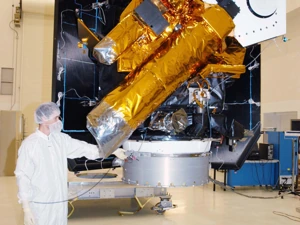
Scientists Find 26 New Bacterial Species in NASA\'s Cleanrooms
By Avery Collins. Jan 18, 2026

Scientists discovered 26 previously unknown bacterial species thriving
inside NASA's highly sterilized spacecraft assembly cleanrooms at
Kennedy Space Center — environments specifically designed to prevent
biological contamination of space missions, according to LiveScience.
The findings, published in the journal Microbiome in May 2025, revealed
that the extreme conditions meant to eliminate microbial life instead
appear to have created a selection pressure that favored bacteria with
extraordinary resistance to radiation, desiccation, and chemical
disinfectants.
The discovery was made by a research team led by Alexandre Rosado at
King Abdullah University of Science and Technology (KAUST) in Saudi
Arabia, who collected swab samples from multiple surfaces inside Kennedy
Space Center's cleanrooms over several years. Genetic sequencing of
those samples revealed the 26 novel species — all belonging to known
bacterial phyla but representing previously undescribed species within
those groups, per LiveScience.
What Makes These Bacteria Unusual
NASA's spacecraft assembly cleanrooms are among the most sterile
environments on Earth. They are maintained at strict particulate and
biological standards set by the Committee on Space Research (COSPAR)
planetary protection guidelines, which are designed to prevent Earth
microorganisms from contaminating other planetary bodies. Surfaces are
regularly treated with chemical disinfectants, UV radiation, and other
sterilization methods that eliminate the vast majority of known
microbial life.
The 26 species found thriving in these conditions possess genetic
machinery that allows them to survive what most bacteria cannot.
LiveScience reported that their genomes contain an elevated number of
genes associated with DNA repair — a capacity that allows the bacteria
to recover from the radiation damage that kills most microorganisms —
as well as genes associated with resistance to oxidative stress and
dehydration. These traits are precisely those that would be advantageous
in the harsh radiation and desiccation environment of Mars.
The Planetary Protection Concern
The discovery carries direct implications for NASA's planetary
protection program, which is legally and scientifically mandated to
prevent the biological contamination of other worlds. If these 26
bacteria survived Kennedy's cleanrooms and were unknowingly present on
spacecraft launched to Mars or other planetary bodies, they could
potentially survive the journey and complicate future attempts to detect
indigenous Martian life.
LiveScience noted that Rosado's team is now building a planetary
simulation chamber at KAUST to directly test whether the cleanroom
bacteria can survive Mars-like conditions: extreme cold, ultraviolet
radiation, low atmospheric pressure, and high concentrations of
perchlorate salts in the soil. The results of those simulations will
directly inform how NASA updates its planetary protection protocols for
future missions.
A Broader Implication for Astrobiology
Beyond the planetary protection question, the discovery expands the
known boundaries of life's adaptability on Earth. Each time scientists
find organisms thriving in environments previously considered
incompatible with life — whether deep-sea hydrothermal vents,
Antarctic ice sheets, highly acidic mine drainage, or NASA's sterilized
assembly rooms — they extend the envelope of conditions that life can
occupy. That expansion has direct implications for the search for life
on other worlds, because it broadens the range of planetary environments
that astrobiologists must consider as potentially habitable.
LiveScience cited Rosado as noting that the cleanroom bacteria represent
a living demonstration of directed adaptation: the sterilization program
did not eliminate life, it selected for hardier life. That principle —
that extreme selective pressure produces organisms with extraordinary
resilience — is one of the foundational arguments for the possibility
that life could persist in the subsurface of Mars, the oceans of Europa,
or the methane lakes of Titan.
References: Scientists Discover 26 New Bacterial Species in NASA’s Spacecraft Cleanrooms

The News Command team was assisted by generative AI technology in creating this content
Trending
Read More
Read More

Read More

Read More

Read More
Read More

Read More

Read More

Read More

Read More

Read More

Read More
Read More

Read More

Read More
Read More

Read More

Read More

Read More

Read More

Read More

Read More

Read More

Read More