
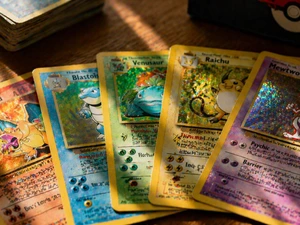
Pokémon Card Values Surge 170% in One Year
By Cameron Hale. Apr 12, 2026
An index tracking thousands of rare Pokémon cards has risen approximately 170% over the past year alone, according to Card Ladder, a data analytics company that monitors collectibles sales, as reported by NPR’s The Indicator from Planet Money. That figure covers an index of rare cards - not the entire market - and reflects price appreciation tracked through actual sales data rather than estimated values.
For context, that rate of growth has outpaced both gold and the broader stock market over the same period, according to NPR. The market now sits at a scale that includes not just dedicated collectors but a growing cohort of financial speculators treating cards as an asset class - one that can be tracked, graded, and traded with the same seriousness as securities.
Three Forces Driving the Market
NPR’s reporting identified three main contributors to the card market’s rapid growth. The first is media attention and celebrity involvement. Influencer and WWE wrestler Logan Paul sold a rare Pikachu Illustrator card for a record $16.5 million in February 2026, according to CNN - a card he had purchased for $5.275 million in 2021. That sale renewed public attention on the high-end market and reinforced the idea that rare Pokémon cards can appreciate significantly over time.
The second driver is the grading system. Cards are submitted to companies like Professional Sports Authenticator, or PSA, where they are evaluated on a scale of 1 to 10. The difference in value between a 9 and a perfect 10 can be substantial - a Pikachu collaboration card graded at a 9 sells for around $800, while the same card at a PSA 10 can reach close to $2,500, according to NPR. That precision-based valuation system has made the market more legible to investors accustomed to standardized asset grading.
Vintage Versus Modern: Two Different Markets
The third factor, and the one that introduces the most risk, is the tension between vintage and modern cards. Vintage Pokémon cards from the late 1990s have a naturally limited supply, particularly at higher PSA grades, which supports elevated valuations. Modern cards, by contrast, are produced with collectibility in mind from the start and exist in much higher quantities.
Joshua Johnson, co-founder of Card Ladder, told NPR that he is concerned the modern card segment could face a correction. If confidence in the market softens, he said, the high supply of modern cards could cause prices to fall quickly. He described the dynamic using the economic concept of the greater fool theory - where buyers purchase not because of intrinsic value, but because they expect someone else to pay more later, according to NPR.
Who Is Buying and Why
The buyer pool today is broader than it was during previous Pokémon card booms. At card shows like the Denver Card Show covered by NPR, attendees range from longtime fans reconnecting with childhood nostalgia to first-time buyers motivated entirely by price appreciation. One collector quoted by NPR spent $1,750 in cash for a single Mega Charizard card graded at a flawless PSA 10, citing its likely long-term value retention.
The Pokémon franchise itself remains the world’s highest-grossing media property, a status that continues to generate new collectors. CNN reported that more than 75 billion Pokémon cards have been produced through March 2025. That volume has given the market enormous breadth - while also raising the question, particularly for modern cards, of how much of the current valuation reflects genuine scarcity versus momentum.
References: Why Pokémon cards are growing faster than your retirement account | Pokémon at 30: Multimillion-dollar cards and spiking demand

The News Command team was assisted by generative AI technology in creating this content
Trending




Read More

Read More
Read More


Read More

Read More

Read More

Read More

Read More

Read More

Read More

Read More

Read More
Read More

Read More